Skip to content

Why Porumbacu de Sus is not “just a village”
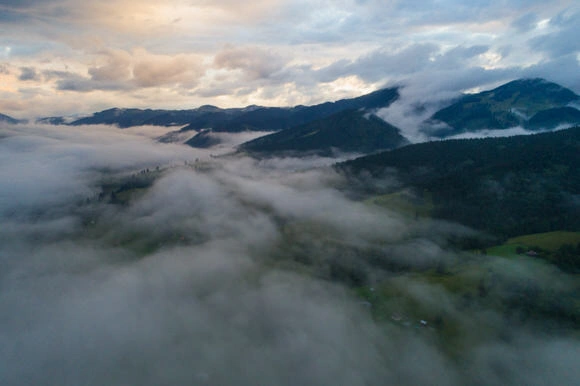
Porumbacu de Sus is a traditional village located in Sibiu County, at the northern foothills of the Făgăraș Mountains. More than a tourist destination, it is defined as a “state of being” and a landmark for slow tourism, offering a balance between accessibility, true peace and authenticity. It is the place where the transition from rural life to contemporary tourism took place by preserving traditional architecture and the natural rhythm of life.
This Complete Guide to Porumbacu de Sus is not just a list of sights or recommendations. It is a detailed map for those who want to understand why this village has become, in recent years, one of the most sought-after destinations for slow tourism, authentic experiences, and reconnecting with nature.
You will discover:
- where it is located and how to get there easily,
- what you can see and do, regardless of the season,
- what “authentic” truly means here,
- why traditional houses are the ideal accommodation choice,
- what a well-spent weekend (or a week) looks like in Porumbacu de Sus.
Contents
Where Porumbacu de Sus is located and why its location matters
Porumbacu de Sus is located in Sibiu County, in the northern part of the Făgăraș Mountains, at the foot of Romania’s most spectacular mountain range. It is one of those rare villages that have managed to remain authentic, despite its growing popularity.
Why its geographic position is a major advantage
The village’s location offers a rare combination:
- proximity to the mountains, without being isolated;
- quick access from major cities (Sibiu, Brașov);
- true peace, unaffected by traffic or crowds;
- varied scenery, from gentle hills to alpine cliffs.
In practical terms, Porumbacu de Sus is where the mountains begin to breathe more calmly. You are not yet “up high”, but you are not fully in the lowlands either. This natural transition creates a balanced and exceptionally welcoming landscape.
Porumbacu de Sus compared to other mountain villages
| Criterion | Porumbacu de Sus | Isolated mountain village | Tourist resort |
| Access | Very good | Difficult | Very good |
| Peace and quiet | High | Very high | Low |
| Authenticity | Very high | High | Low |
| Facilities | Balanced | Limited | Commercial |
| Pace | Natural | Very slow | Fast-paced |
This “in-between worlds” positioning is one of the main reasons Porumbacu de Sus attracts visitors who want balance, not extremes.
How to get to Porumbacu de Sus – simple, stress-free
A major advantage of the area is accessibility. You do not need a 4×4, a forest road, or an off-road adventure.
Road access
- From Sibiu: ~35–40 minutes
The road is good, well signposted, and suitable for any type of car. - From Brașov: ~1 hour – 1 hour and 15 minutes
A scenic route, ideal even for a spontaneous weekend. - From Bucharest: ~4–4.5 hours
Perfect for a 3–4-day getaway.
Year-round accessibility
A detail often overlooked, yet extremely important: Porumbacu de Sus is accessible in winter as well. The roads are maintained, and the village does not become “inaccessible” with the first snowfall, as happens with other mountain destinations.

What makes Porumbacu de Sus so special (beyond the photos)
Porumbacu de Sus does not impress only through the spectacular frames circulating on Instagram. In fact, if you come here only for photos, you risk missing the very essence of the place. What truly makes it special is the constant feeling of deep normality—that rare sense that things are exactly as they should be.
Here, time is not organized around tourist attractions, but around light, seasons, and the rhythm of nature. Mornings are quiet, without haste. Days unfold naturally, and evenings bring a peace that is not imposed, but accepted. There is no pressure “to do something”, and this is, paradoxically, deeply liberating.
Another element that sets Porumbacu de Sus apart is the coherence between people, place, and landscape. The village was not reinvented for tourists. It functions for locals, and visitors are invited to adapt to this pace, not the other way around. This subtle reversal of the host–tourist relationship creates an authentic, deeply respectful experience.
Moreover, Porumbacu de Sus is one of the few places where the transition between rural life and contemporary tourism has happened without visual or cultural ruptures. New houses do not shock, restorations do not show off, and modern comfort is integrated discreetly. Everything seems designed to last, not to impress quickly.
What can you visit in Porumbacu de Sus?
The Clay Castle of the Valley of the Fairies – the symbol that drew the world’s attention
The Clay Castle put Porumbacu de Sus on the international tourist map, but its role goes far beyond being an “Instagrammable” sight. It is a visual manifesto for natural building, for returning to simple materials, and for an architecture that dialogues with the landscape rather than dominating it.
Many visitors come for a few photos and leave. Those who stay a bit longer understand that this place is, in fact, an invitation to see the village with different eyes. After seeing the Clay Castle, you begin to notice details: wooden fences, old roofs, the proportions of traditional houses.
The Porumbacu River – the village’s axis of calm
The Porumbacu River is not a tourist attraction in the classic sense, but it is one of the most important elements of the experience. It runs through the village quietly and steadily, providing a soundscape that quickly becomes part of your everyday life.
Evening walks along the river, mornings with coffee on the bank, or simply sitting on a stone without a clear purpose are small experiences, yet deeply memorable. In Porumbacu de Sus, the river is not scenery—it is presence.
The village itself – the attraction that is not promoted
Old houses, massive gates, barns, gardens, and side roads together form the most valuable attraction: a functioning, authentic village. Not museumified, not staged, not overly polished.
It is the kind of place where a walk without a map is enough for an entire afternoon.
Hiking and mountain trails from Porumbacu de Sus
Porumbacu de Sus is one of the most accessible gateways to the Făgăraș Mountains.
The trail to Negoiu Hut
- Duration: 4–5 hours
- Difficulty: moderate
- Recommended: for hikers with intermediate experience
It is a spectacular but well-marked route, offering a clear transition from forest to alpine scenery.
Trails for families and beginners
- Piatra Prânzului
- Forest walks
- Cycling routes
These routes allow exploration without pressure or special equipment.
Authentic activities: what you do when you “do nothing”
One of the biggest surprises for those who come here is discovering that they do not feel the need for a schedule. In Porumbacu de Sus, activities are not “provided”; they arise naturally.
You can spend hours wandering through the village, noticing seemingly ordinary details: how the light falls on an old gate, the sound of animal bells, how the smell of the air changes toward evening. These are real activities, even if they do not appear in brochures.
Many visitors discover the pleasure of slow cooking with local ingredients, unhurried meals, long conversations, or reading outdoors. The lack of excessive stimuli creates mental space—and that is increasingly rare.
In Porumbacu de Sus, “doing nothing” is not wasted time, but time recovered.
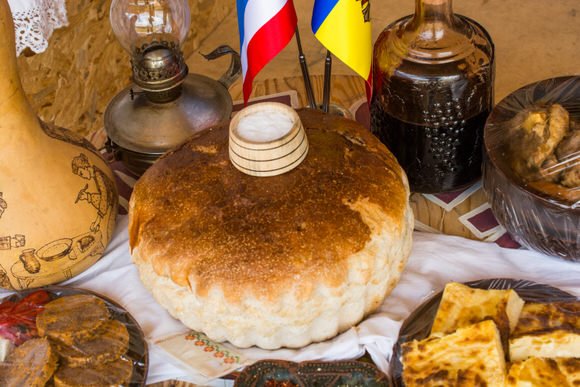
Where and what to eat in Porumbacu de Sus
The culinary experience in Porumbacu de Sus is closely tied to the idea of honest simplicity. You will not find sophisticated menus or elaborate plating, but you will find food with meaning.
Local products—milk, cheeses, eggs, garden vegetables—are the basis of many meals. Many visitors choose to cook for themselves, precisely to maintain this direct connection with the ingredients and the rhythm of the place.
Eating is not a separate event from the rest of the experience, but a natural continuation of the day. No rush. No noise. No pressure.
This approach turns meals into moments of reconnection, not just food breaks.
Accommodation in Porumbacu de Sus – why traditional houses are the clear winner
How you choose to stay in Porumbacu de Sus decisively shapes the experience you will have. More than in other tourist destinations, here accommodation is not just a place to sleep, but a space where you learn the village’s rhythm, the calm of the place, and your relationship with nature.
In recent years, more and more visitors have begun to avoid classic guesthouses or standardized units, choosing instead restored traditional houses that offer a profoundly different experience. It is not only about aesthetics, but about how you feel in that space.
Why traditional houses are the ideal choice in Porumbacu de Sus
Traditional houses offer something conventional accommodation cannot replicate:
- true privacy, without shared walls or common corridors
- generous space, both indoors and in the yard
- natural materials (wood, stone, authentic textiles) that create sensory comfort
- complete quiet, without artificial ambient noise
- a direct connection to the village, not isolation in a tourist bubble
The difference is one of state. In a traditional house, you do not simply “stay”; you live there temporarily. You make your coffee in peace, sit on the porch, hear the village waking up, and do not feel the need to leave immediately “somewhere”.
This form of accommodation perfectly matches the spirit of Porumbacu de Sus: slow, coherent, authentic.
From simple restoration to a complete experience
Not all restored old houses manage to create this balanced experience. The difference lies in how restoration is understood: as a process of respect for the past, not as a simple aesthetic intervention.
This is where a relevant example appears of what the maturation of tourism in Porumbacu de Sus truly means.
Oberwood – a benchmark for premium traditional accommodation, done properly
Oberwood is not just a place to stay, but a thoughtful and responsible interpretation of contemporary traditional living. It is the kind of project that does not try to impress through opulence, but through coherence.
What sets Oberwood apart in the context of Porumbacu de Sus is how it manages to combine:
- respect for the original architecture of the houses
- discreet modern comfort, without breaking the rural atmosphere
- minimalist design, highlighting natural materials
- an experience of peace and retreat, without unnecessary embellishments
Everything is conceived so that the guest feels part of the place, not as if they are consuming it. Every detail—from textures and light to the way space is used—supports the idea of balance.
Oberwood thus becomes a benchmark for the type of accommodation Porumbacu de Sus naturally promotes: houses with identity, not standardized units; real experiences, not tourist packages.
Why this type of accommodation defines the area’s future
The integration of projects such as Oberwood clearly shows the direction Porumbacu de Sus is heading toward:
quality, low-impact tourism, aimed at people who seek meaning, not checklists.
Properly restored traditional houses:
- preserve the village’s identity
- attract a respectful type of visitor
- create long-term value
- support the local community
In this context, accommodation is no longer just a service, but part of the place’s story.
When restoration becomes a culture of living: a model of contemporary traditional accommodation in Porumbacu de Sus
There is a subtle but essential difference between a beautifully restored house and a correctly restored house. The first impresses visually. The second changes how you live the space. In Porumbacu de Sus, where tradition is not décor but daily reality, this difference becomes immediately visible.
In recent years, several initiatives to restore old houses have appeared. Some successful, others less so. Very few, however, can be considered models of maturity—projects that understand the village not as a tourist backdrop, but as a living organism. Oberwood belongs to this rare category.
Why choose a traditional house?
What distinguishes this kind of project is not the level of comfort or the carefully controlled aesthetics, but the philosophy of living. Oberwood does not offer a hotel-style experience transplanted into an old house; it offers the exact opposite: a form of temporary living that preserves the logic of the village and discreetly adapts it to contemporary life.
Spaces are not designed for quick transit, but for staying. Rooms are not optimized for turnover, but for breathing. Common areas are not conceived as “facilities”, but as natural extensions of everyday life: places where you sit, not places you pass through.
What does that look like? Here it is:

This approach is felt immediately—in the way the light enters in the morning, in the stillness of the evening, in the absence of unnecessary stimuli. Everything invites you to slow down without explicitly telling you to do so.
Restoration that respects time, not erases it
One of the most common mistakes in restoring traditional houses is the temptation to “correct” the past—to straighten imperfections, to uniform things, to bring everything to a rigid contemporary standard. In mature projects, time is not erased; it is integrated.
In the case of Oberwood, interventions are deliberate, not invasive. You can feel a constant care for:
- preserving the original proportions
- respecting authentic materials and textures
- avoiding forced contrasts between old and new
- integrating modern technologies in an invisible way
The result is not an “Instagrammable” space, but a credible one. A place that does not try to look old, because it truly has a history. And it does not try to look modern, because modernity is already there—discreet and functional.
A kind of luxury that does not show off
If we are to speak about luxury in this context, it is important to redefine the term. This is not about opulence, excessive amenities, or staged experiences. Luxury, here, is the absence of noise—visual, auditory, mental.
It is the luxury of having space. Of not being interrupted. Of not being bombarded with options. Of having time to sit in a yard without doing anything productive. Of feeling comfortable without being constantly impressed.
This kind of luxury aligns perfectly with the spirit of Porumbacu de Sus. It does not come to change it, but to support it. That is precisely why projects like Oberwood do not feel foreign to the village, but like natural continuations of it.
A proper relationship with the community and the place
An important indicator of a mature accommodation project is its relationship with the local community. In Porumbacu de Sus, where people do not live off tourism but alongside it, this aspect is essential.
The model proposed here does not create isolated enclaves; it integrates into the fabric of the village. Guests are not separated from local reality, but invited to observe it and respect it. There are no shows for tourists—just real life continuing undisturbed.
This positioning naturally attracts a certain type of visitor: people who are not looking for constant entertainment, but meaning; who do not want to consume the place, but to understand it.
Why such models matter for the future of Porumbacu de Sus
Porumbacu de Sus is at a moment of delicate balance. Growing popularity can bring development, but also risks. The difference will be made by projects that choose to grow in depth, not in volume.
Accommodation models inspired by a philosophy similar to Oberwood’s:
- raise expectations without forcing the place
- educate the market without explicit messaging
- preserve the village’s identity
- create long-term value, not seasonal peaks
They show that tourism does not have to be loud to be viable, and that true luxury can be deeply compatible with tradition.
A benchmark, not an exception
Taken as a whole, this kind of project should not be an exception, but a benchmark—not to be copied mechanically, but to show that there is a mature way to develop tourism in authentic rural areas.
In the context of Porumbacu de Sus, Oberwood functions as a quiet point of reference: it does not dominate or impose itself, but it offers a clear example of how the past and the present can coexist without conflict.
And for the visitor, the experience becomes something rare: not just a successful holiday, but a form of recalibration.
Weekend in Porumbacu de Sus: how to plan 2–3 days without haste and without the pressure of “ticking boxes”
For those arriving in Porumbacu de Sus for the first time, one of the most common questions is: “What do we actually do on a weekend?”
The right answer is not a list of sights, but a proposed rhythm.
Porumbacu de Sus is not a destination to consume quickly. It is a place you feel, and a well-organized weekend means, in fact, allowing yourself to slow down.
The itinerary below is designed for those who want to understand the village, not just visit it.
Day 1 – Arrival and settling into the place’s rhythm
The first day should not be about “doing”, but about truly arriving.
After arrival, the best choice is not to schedule anything. A slow walk through the village is enough to understand the atmosphere: the scattered houses, the quiet side roads, the natural sounds that quickly become familiar. This is the moment when your body begins to leave the urban rhythm behind.
In the evening, ideally, you should stay close to your accommodation. A simple dinner, cooked or sourced locally, and a few hours without screens are more valuable than any planned activity. The first night in Porumbacu de Sus is often the deepest: sleep comes quickly and is unusually restful.
Why this day matters:
Because without this adjustment stage, the rest of the weekend risks being lived “on autopilot”, rather than in harmony with the place.

Day 2 – Gentle exploration, nature, and real breaks
The second day is dedicated to exploration, but in a relaxed way, without pressure about distances or time.
The morning can begin slowly, with coffee in the yard or on the porch. After that, it is the right time for a longer walk—either along the river or on an easy forest trail, accessible without special equipment. There is no need for “spectacular” sights—the landscape itself is enough.
At lunchtime, a simple picnic or a light meal keeps the day’s rhythm. The afternoon is ideal for what Porumbacu de Sus offers best: a pause. Reading, being outdoors, unhurried conversations, or simply observing the village.
The evening can bring a quiet dinner and, for those who wish, a small fire or a few hours spent outside under the clear sky.
Why this day works:
Because it combines movement with rest, without creating fatigue. It is the day that brings a genuine sense of being on holiday.
Day 3 – Closing the experience and leaving without fatigue
The last day should not be treated as a “check-out”, but as a natural conclusion.
Morning is usually the quietest. A short walk through the village or a few moments spent outside are enough to anchor the experience. There is no need to “do one more thing” before leaving.
Many visitors note that they leave Porumbacu de Sus without the sense of exhaustion typical of other tourist weekends. There is no FOMO, no regret that they “didn’t get to it”. Precisely because nothing was forced.
Why this ending is important:
Because it distinguishes Porumbacu de Sus from other destinations. You do not leave more tired than you arrived, but more at ease.
Who this type of weekend is for
✔️ overworked people who need true peace
✔️ couples seeking reconnection, not intense entertainment
✔️ families who want nature and a gentle pace
✔️ people who appreciate simple experiences, well lived
Who it is NOT for
✖️ those looking for nightlife
✖️ those who want to “see everything” in 48 hours
✖️ those who prefer rigid, packed schedules
Why a weekend is enough—and, at the same time, not enough
A weekend in Porumbacu de Sus is enough to understand the place, but not enough to exhaust it. Many leave with the feeling that they would stay longer—not to do more things, but to remain longer in the same state.
And this is perhaps the best indicator that the experience was a successful one.
Porumbacu de Sus is not a destination. It is a choice.
In a world where holidays have become crowded, scheduled to the minute, and consumed quickly, Porumbacu de Sus offers a rare alternative: conscious slowing down.
It does not promise constant spectacle. It does not deliver artificial entertainment. It does not compete with resorts or tourist cities. Instead, it offers something far more valuable: true peace, a natural rhythm, and space for yourself.
Those who come here are not looking for “what to see”, but how to feel. And Porumbacu de Sus answers exactly that need—through the mountains, the village, the people, and forms of living that respect the place.
This is not a guide for everyone.
It is a guide for those who know that true luxury is not displayed, but lived.
And if you come to understand that, Porumbacu de Sus will not be just another destination ticked off, but a benchmark you will return to.
Counterarguments and limitations: who Porumbacu de Sus is NOT for
Transparency is essential in an honest guide.
Porumbacu de Sus is not a universal destination—and that is, in fact, one of its greatest strengths.
| A common visitor expectation | Why Porumbacu de Sus is NOT suitable | What it offers instead (for the right audience) |
| Nightlife, clubs, bars | The village is quiet, with no organized nightlife activities. After dark, the pace becomes even slower. | Quiet evenings, a starry sky, deep rest, and genuine reconnection |
| A packed itinerary, “things to tick off” | There is not a large number of classic tourist attractions. The experience is not built on quick attractions. | The freedom to live without a rigid schedule and without time pressure |
| Constant entertainment for large groups | The area is not oriented toward events, parties, or mass tourism. | Privacy, personal space, and authentic quiet |
| All-inclusive resort or standardized services | You will not find commercial complexes, entertainment teams, or ostentatious amenities. | Personalized experiences, accommodation with identity, and a direct relationship with the place |
| Turnkey urban comfort | Rural life requires adaptation: a different pace, simple infrastructure, and a lack of commercial crowds. | Natural comfort, space, clean air, and functional simplicity |
| Extreme activities or adrenaline | Porumbacu de Sus is not a destination for intense adventure or extreme sports. | Easy hikes, walks, accessible nature, and safety |
| A quick city-break style trip | The village cannot be efficiently “done” in a rushed visit. | Slow stays that leave you feeling truly rested |
| Staged tourist interaction | Locals do not play roles for tourists and do not offer “folk shows”. | Authentic contact with real village life, without gimmicks |
| Entertainment for children, theme-park style | There are no amusement parks or artificial facilities for children. | Open nature, safety, exploration, and unstructured play |
Why this limitation is actually an advantage
By not trying to please everyone, Porumbacu de Sus manages to remain coherent.
This natural filtering of visitors keeps the village quiet, authentic, and sustainable in the long term.
For those seeking peace, meaning, and quality time, these “counterarguments” are not disadvantages, but selection criteria.
Porumbacu de Sus as an investment in yourself (not just a holiday)
At a time when most tourist destinations compete on volume, noise, and quick promises, Porumbacu de Sus offers a radically different approach: an investment in your well-being, not a packed itinerary.
Coming here does not mean ticking off sights, but regaining something essential—time, clarity, and calm. It is the kind of place you do not leave with hundreds of photos, but with a persistent feeling that life can be lived more simply and more steadily.

Why Porumbacu de Sus is not an expense, but an investment
Any real investment generates a return. In the case of Porumbacu de Sus, the return is not financial, but deeply personal:
- true rest, not just a physical break
- a mental reset, without excessive stimulation
- reconnection with nature, in an accessible way
- an inner pace recalibrated, that persists after you leave
Many visitors notice that the effect does not disappear once they return home. Days are lived differently, priorities settle more clearly, and the need to “escape” becomes more conscious.
A luxury not measured in stars or amenities
Porumbacu de Sus redefines the idea of luxury. Here, luxury does not mean opulence, but:
- space
- silence
- unfragmented time
- coherence between place, people, and experience
It is the kind of luxury that is not displayed, but felt immediately. A luxury that does not exhaust you, but calms you. And that is precisely why it is increasingly sought after by those who understand that true value comes not from accumulation, but from simplification.
Why Porumbacu de Sus attracts a certain type of person
This destination does not try to please everyone. It does not promise continuous entertainment and does not offer standardized solutions. Instead, it attracts people who:
- are tired of crowds and noise
- seek real experiences, not staged ones
- value lived tradition, not displayed tradition
- understand that peace and quiet has become a privilege
For this kind of visitor, Porumbacu de Sus is not “just another place”, but a benchmark. A space you return to not out of boredom, but out of a genuine need for balance.
A place that teaches you to choose differently
Perhaps the most valuable thing Porumbacu de Sus offers is this subtle lesson: not everything good has to be intense. Sometimes, the most transformative experiences are those that allow you to slow down and be present.
In a world that constantly demands more—faster, louder, more—Porumbacu de Sus reminds you that “enough” may be exactly what you need.
Porumbacu de Sus is not a mass-market destination and does not aim to become one. It is a place for those who understand that true personal progress begins when you allow yourself time.
If you come here, you will not find spectacular promises.
You will find, however, peace, meaning, and a rare form of comfort.
And these are, without a doubt, the safest long-term investments.