Skip to content
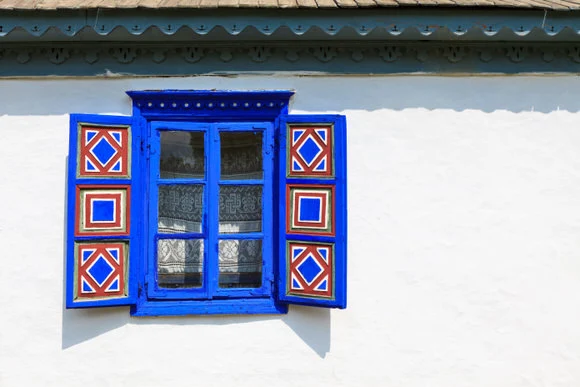

There are moments in life when a place stops us from our usual rhythm. It may be an old house with massive beams, the smell of burnt wood, or a blue color that we once saw in childhood. These are details that not only please us but touch us deeply.
Today, more and more people are looking for exactly this type of experience: a place that not only offers comfort but tells a story. And these stories appear especially where tradition is reinterpreted, not replicated.
The concept of reinterpreted traditional design has become a phenomenon in architecture and tourism, and Transylvania is one of its most vibrant scenes. Current examples show how powerful this aesthetic can be when applied with respect and intelligence.
This article explores the theme in depth, clearly explaining:
- what “reinterpreted traditional design” means
- how to combine old aesthetics with modern comfort
- why it manages to move and convince
- what a perfect integration model looks like (the Oberwood example)
- what are the principles, materials, colors, and philosophy behind this style
Prepare for a journey through time, under the sign of the authentic and the modern.
Contents
What is “reinterpreted traditional design” anyway?
If we were to explain it simply, we could say it’s “a way of placing the past in the present without it losing its soul.”
However, in design, things are a bit more nuanced.
Reinterpreted traditional design means preserving the architectural, symbolic, and material foundations of a traditional house, but combining them with a minimalist, functional, and up-to-date aesthetic.
Tradition is not copied, it is translated
One of the biggest mistakes when we talk about traditional design is the temptation to copy. Copying produces decor, but it does not produce emotion. It produces rigid, museum-like decors that look “correct” but are not lived in. Reinterpretation, on the other hand, is an act of cultural translation: it takes the deep meaning of tradition and adapts it to contemporary language.
In reinterpreted traditional design, it is not the form that is essential, but the function, the symbol, and the material. An old beam is not valuable because it is old, but because it bears the marks of time. A dowry chest is not important as a decorative object, but as a witness to everyday life of the past. Reinterpretation means preserving this emotional charge but giving it a current utility.
Tradition is not mimically reproduced, but filtered through the needs of contemporary man — comfort, light, functionality, hygiene, simplicity. Thus, a reinterpreted house does not seem “old,” but timeless. It does not seem “traditional,” but authentic.
This approach is the key difference between kitsch and refinement. Copying burdens. Translation liberates.
Why do we need reinterpretation now?
The reinterpretation of tradition is not an aesthetic trend, but a direct response to the current context. We live in a period dominated by speed, visual over-stimulation, artificial materials, and standardized spaces. In this landscape, people instinctively seek the opposite: tranquility, meaning, roots.
Reinterpreted traditional design offers exactly this balance. It reconnects the individual with a slower pace, with materials that “breathe,” with spaces that do not visually assault. Reinterpreted houses are not just homes or accommodation spaces, but psychological refuges.
More and more tourists are choosing destinations that tell a real story, not just those that look good in photos. Reinterpretation thus becomes an essential tool for premium, experiential, and sustainable tourism. Preserving local identity in a form that is relevant to the present, without sacrificing modern standards of comfort.
In addition, reinterpretation is also an act of cultural responsibility. Instead of abandoning or demolishing rural heritage, we reintegrate it into contemporary life. We do not preserve the past in a showcase, but we let it live.
Reinterpreted traditional design offers all these elements, without compromise.

Defining elements of reinterpreted traditional design
Reinterpreted traditional design is not a sum of decorative objects, but a coherent system of principles. These principles are built around four major pillars: existing architecture, natural materials, color scheme, and the balance between old and new.
The first defining element is preserving the original architecture. The beams, thick walls, vernacular proportions, and traditional openings are not corrected, but enhanced. Imperfections are not hidden, but subtly highlighted through light and texture.
The second element is authentic materiality. Solid wood, local stone, lime, clay, wrought iron, and natural textiles create a common language of comfort. These materials not only look good but directly influence the well-being of the occupants.
The third element is tempered color scheme. The reinterpreted traditional palette avoids harsh contrasts and bright colors. Lime whites, earthy tones, Saxon blue, or muted green create calm backgrounds, over which traditional accents gain visual weight.
Finally, reinterpretation involves aesthetic discipline. Fewer objects, but each with meaning. Less decor, more space. The result is an airy, warm, and coherent interior.
This aesthetic discipline is not an end in itself, but the framework that allows authentic values to surface. Once the space is freed from surplus and each element finds its natural place, attention naturally shifts to the structure that supports the entire dwelling.
Reinterpretation actually begins with respecting the foundation — the old architecture — because before objects, colors, or finishes, the identity of a Transylvanian house is defined by its shape, the materials from which it was built, and the deep relationship between the interior and the surrounding environment.
Preserving the old architecture
Traditional Transylvanian houses have unique elements that deserve to be preserved: beams, clay walls, narrow windows, carved doors, local stone.
1. Massive beams – the skeleton of identity
Nothing says “authentic” like an old beam, with cracks, knots, and traces of time.
In reinterpretation:
- they are cleaned and treated with care
- they are not hidden, but enhanced with warm light
- they become a central element in the design
2. Clay or lime walls – the texture that breathes
If you have ever entered a house with clay walls, you have felt the difference.
Fresher air.
Natural warmth.
The feeling that the space breathes with you.
In reinterpretation:
- the natural texture is preserved
- artificial plasters are avoided
- they are highlighted by indirect light
3. Small windows and vernacular proportions
Contemporary design prefers huge windows.
But, in reinterpretation, the historical proportions are not destroyed.
The result?
An interesting game between:
- intimacy
- warm light
- authentic rural atmosphere
Natural materials – a universal language of comfort
There is a subtle but profound difference between a space that looks good and one that feels good. This difference does not depend on styles, trends, or decorative objects, but on the material from which the interior is built.
In reinterpreted traditional design, materials are not chosen for immediate visual effect, but for the way they influence the atmosphere, emotional state, and daily comfort of those who live or spend time in that space.
Natural materials create a direct connection between the interior and the surrounding environment. They bring into the house the texture of the earth, the warmth of the wood, the solidity of the stone, and the fineness of the organic fibers, generating a sensory balance that is difficult to replicate through artificial alternatives. Natural surfaces are not perfectly uniform, and it is precisely these subtle variations that offer depth and character to each space.
In a context where many contemporary interiors are dominated by industrial, glossy, or synthetic finishes, the return to authentic materials becomes a form of refuge. It is a choice that speaks about the desire for calm, simplicity, and durability.
Spaces built from natural raw materials do not tire visually, do not age quickly, and do not go out of style, because they are anchored in a timeless aesthetic language.
In the reinterpretation of tradition, natural materials also have an essential functional role. They contribute to regulating humidity, maintaining a pleasant indoor temperature, and creating a healthy microclimate. Moreover, these materials transmit a sense of honesty — nothing is hidden under artificial layers, nothing tries to appear other than it is.
Solid wood, stone, clay, handmade metal elements, and textiles made of natural fibers make up a common vocabulary of authentic comfort. Each of these materials brings its own contribution: warmth, stability, breathability, or texture. Together, they build interiors that do not impress through excess, but through balance, naturalness, and coherence.

Why are natural materials so important?
Because:
- they regulate the microclimate
- they reduce visual stress
- they induce calm and balance
- they create a warm and tactile atmosphere
- they are timeless
A study conducted by the Environmental Psychology Journal shows that exposure to natural materials reduces cortisol levels by up to 13%.
This means that a space with wood, stone, and natural fabrics is not only beautiful — it is also healthy.
Reinterpreted traditional color scheme
Color is one of the most subtle, but also the most powerful tools in defining an atmosphere. In spaces inspired by Transylvanian rural architecture, the color scheme was never chosen randomly. It appeared as a natural response to materials, light, climate, and lifestyle.
That is why, in the contemporary reinterpretation of tradition, the color palette is not a decorative exercise, but a natural continuation of the way these houses were originally conceived.
In a world dominated by strong contrasts and saturated colors, the reinterpretation of the traditional color scheme proposes an aesthetic of balance. The tones are tempered, calm, almost silent, leaving the space the freedom to breathe. The color does not compete with the texture of the wood, with the roughness of the stone, or with the imperfections of the hand-finished walls, but enhances them.
This chromatic approach creates interiors that do not tire visually and that remain relevant regardless of the passage of time. Instead of ephemeral trends, a coherent, stable atmosphere is built, which supports the idea of long-term comfort. Color thus becomes the background on which life is placed, not the element that dominates it.
The palette that breathes: between earth, light, and nature
The reinterpreted color scheme starts from shades inspired directly from the surrounding environment: the warm whites of lime, the earthy tones, the gentle ochres, the muted green of the vegetation, and the discrete accents of blue or mineral gray. These colors are not applied for dramatic effect, but to create continuity between interior and exterior.
Light-colored surfaces reflect natural light and amplify the feeling of space, while darker tones are used punctually, as elements of depth and stability. The result is a balanced chromatic game, in which nothing is strident, and each shade has a clear role.
Chromatic accents – measure, not excess
An essential principle of chromatic reinterpretation is the use of accents with maximum measure. Color appears in details: on an old restored door, in a ceramic object, in a textile element, or in a piece of furniture with history. These accents are not meant to attract attention aggressively, but to create rhythm and visual identity.
By limiting the palette and subtly repeating certain shades, the space gains coherence and calm. Each chromatic accent becomes significant precisely because it is rare and well placed.
Color scheme as an emotional instrument
Above all, the reinterpreted traditional color scheme influences the emotional state of those who live in or visit these spaces. Natural tones induce tranquility, security, and familiarity. They create the feeling of a lived-in place, not an artificial decor.
This color palette supports the idea of refuge, of returning to the essential, being highly appreciated in the context of experiential tourism and conscious living. Spaces colored in this way do not seek to impress, but to offer an authentic, calm, and memorable experience.
In the reinterpretation of tradition, color is not a statement of style, but a form of respect for context, light, and material. It links the past to the present and transforms the interior into a coherent, lively, and deeply human space.
Examples of reinterpreted chromatic combinations
1) White + natural wood + Saxon blue (accent)
2) Pale ochre + natural stone + olive green
3) Lime white + cream textiles + black wrought iron elements

Restored traditional furniture – the centerpiece
Furniture is where reinterpretation becomes visible and memorable. An old table, a hand-carved chair, or a dowry chest are not simple decorative elements — they become emotional centers of gravity of the space.
We emphasize the importance of authentic furniture, restored with respect, not industrially reproduced.
Restoration involves preserving the patina, the traces of time, the original texture. It does not pursue “perfection,” but the truth of the material.
In reinterpretation, old furniture acquires new functions: doors transformed into bed headboards, chests used as storage spaces, old tables integrated into modern dining areas. This contrast creates positive aesthetic tension and absolute uniqueness — no space resembles another.
For tourists, these pieces become memorable. They do not just remember the room, but the object.
The story.
The emotion.
No style of reinterpretation is complete without recovered furniture.
Thus, we are talking here about:
- Saxon tables
- dowry chests
- carved chairs
- old doors transformed into headboards
- restored massive cabinets
Here is where the magic happens: old furniture acquires a new meaning.
A personal story (anecdote)
I visited, a few months ago, a house restored in a reinterpreted style. In the bedroom, an old door, made of solid wood, had become a bed headboard. Its cracks, although treated and protected, retained an organic pattern that you could see in the morning, in the warm light.
The owner told me:
“I didn’t want a banal headboard bought from the store. I wanted something that would tell me a story every day.”
This is the essence of reinterpretation: objects with history, brought into the present.
This personal experience shows that reinterpretation does not stop at form or material, but continues through the way the space is lived day by day. However, for objects with history to be able to tell their story truly, they need an essential ally: light.
The lighting is what reveals the texture of the wood, the depth of the cracks, and the emotion of the details, transforming each old piece into a living element. Thus, the transition from object to atmosphere is natural, and the role of light becomes essential in the connection between rustic and contemporary.

Lighting – the bridge between rustic and contemporary
In a reinterpreted space, light is never a mere technical detail. It is the element that connects the past with the present, matter with emotion, and functionality with atmosphere. Without careful consideration of lighting, even the best-restored elements risk remaining mute, flat, or misunderstood.
Light is what gives life to textures, highlights the beautiful imperfections of natural materials, and transforms an interior from a static decor into a living space.
In traditional houses, light had a role deeply connected to the rhythm of the day. The windows were small, and the interior was shaped by gentle shadows and the glow of the fire or simple lamps. The contemporary reinterpretation does not try to reproduce these conditions, but to adapt them in an intelligent way, preserving the intimate atmosphere, but offering visual comfort and modern functionality.
Lighting thus becomes a narrative tool. It guides the eye, creates depth, and emphasizes what really matters: the old beams, the handcrafted surfaces, the furniture with patina, and the details that bear the marks of time. Without ostentation, light builds emotion.
Warm light – the foundation of the atmosphere
An essential principle of lighting in reinterpreted traditional design is the use of warm tones. These support the feeling of intimacy and safety, approaching the natural light of sunset or the discreet glow of the fire. Cold light is avoided because it creates a visual and emotional break from natural materials and the desired atmosphere.
The light sources are chosen so as not to dominate the space, but to accompany it. They complement the colors of the walls, highlight the fibers of the wood and the depth of the stone, without creating harsh contrasts or aggressive shadows.
Indirect lighting – respect for texture and matter
Another defining element is the use of indirect lighting. Instead of visible and dominant sources, the light is hidden, filtered, or reflected, so as to reveal the surfaces gradually. This approach allows materials to retain their authenticity and be perceived naturally.
Indirect lighting accentuates volumes, outlines spaces, and creates a fluid transition between the functional areas of the house. The result is a calm, coherent atmosphere that invites relaxation and contemplation.
Light fixtures with a discreet character
In the reinterpretation of tradition, light fixtures are not the stars of the space. They are chosen for the simplicity of their shapes and for their ability to integrate harmoniously into the whole. Metals with a matte finish, opalescent glass, and clean lines complement the aesthetics without competing with the old elements.
Sometimes, objects with history are adapted to function as light sources, adding an extra layer of authenticity. Other times, contemporary solutions are visually masked, leaving the feeling that light exists naturally, without an obvious source.
Light as a tool for zoning and rhythm
Lighting plays an essential role in organizing the space. Through subtle variations in intensity and positioning, areas of intimacy, focal points, and visual paths are created. Each room acquires its own rhythm, adapted to its function, without losing the overall coherence.
This luminous zoning is extremely important in spaces intended for tourism, where the experience must be intuitive and comfortable. Guests should not have to “understand” the lighting, but to feel it.
Lighting as an emotional experience
Beyond the aesthetic and functional aspect, lighting profoundly influences the emotional state. Well-thought-out lighting reduces stress, induces calm, and creates a feeling of refuge. In the context of reinterpreting tradition, this is essential: the space must not only look good, but also offer an authentic state of well-being.
Thus, lighting becomes the real bridge between rustic and contemporary. It allows the old elements to be perceived in a current key and modern technology to remain discreet, almost invisible. The result is a coherent, warm, and deeply human interior, in which the past and present coexist naturally.
Types of lighting used in reinterpretation
- indirect lighting (for natural textures)
- spots hidden in beams
- technically adapted traditional lamps
- warm bulbs, not cold
- diffuse lighting for intimacy
Light becomes part of the story, not just a function.
Modern minimalism + traditional simplicity
An interesting aspect is represented by the natural symbiosis between minimalism and traditional.
What do they have in common?
- they use few objects
- they emphasize functionality
- they prefer natural materials
- they favor light
- they avoid visual clutter
Why do they work so well together?
Because authentic tradition is never “kitsch.”
It is simple, sincere, and essential — just like minimalism.
The exterior space: when the courtyard becomes part of the design
In Transylvanian rural architecture, the courtyard has never been a simple transit space. It has always represented a natural extension of the house, a place for meeting, working, resting, and connecting with nature. In the contemporary reinterpretation of tradition, this deep relationship between interior and exterior is brought to the forefront, and the courtyard becomes an integral part of the living experience.

In a period when people are increasingly seeking contact with nature and a slower pace of life, the reinterpreted courtyard becomes a true refuge. It is the place where time slows down, noise disappears, and the experience of space moves from visual to sensory.
Continuity between interior and exterior
A key principle of reinterpretation is continuity. The materials used inside are also found outside, in adapted forms: naturally treated wood, local stone, permeable surfaces, and finishes that age beautifully. This visual and tactile coherence makes the transition between house and yard almost imperceptible.
Thresholds are reduced, perspectives are opened, and the gaze is guided towards the landscape. The exterior does not compete with the interior, but complements it.
Simple, meaningful arrangements
The reinterpreted courtyard avoids the artificial and the excessive. There are no unnecessary ornaments or standardized solutions. Instead, each element has a clear role and a functional justification: a solid wood bench under an old tree, an alley of irregular stone, a resting corner facing the sun or the mountains.
These arrangements are not spectacular through opulence, but through naturalness. They create spaces to stay, not just to look at, inviting conversation, reading, or simply contemplation.
Vegetation as part of architecture
Plants are not treated as decoration, but as part of the landscape architecture. Local species, naturally adapted to the area, which do not require aggressive interventions, are preferred. The gardens are rather controlled wild than perfectly ordered, reflecting the natural rhythm of the village.
Vegetation offers shade, privacy, and seasonal change. Spring brings freshness, summer coolness, autumn warm colors, and winter silence. Thus, the courtyard becomes a living space that transforms with the seasons.
The outdoor space as a sensory experience
The reinterpreted courtyard is not designed only to be seen, but to be lived. The sound of footsteps on the stone, the smell of wood warmed by the sun, the rustling of leaves, and the play of light create a complete experience that complements the interior.
This sensory dimension is extremely important in the context of experiential tourism. Guests do not only remember the room, but also the mornings spent outside, the quiet evenings, or the moments of respite in the open air.
The courtyard as a space for reconnection
In the reinterpretation of tradition, the courtyard becomes a place of reconnection — with nature, with oneself, and with a more balanced way of life. It offers intimacy without isolation and openness without exposure. It is a space that asks for nothing, but offers a lot.
Thus, the exterior is no longer a simple frame for the house, but a natural extension of it. The reinterpretation is complete only when the interior and exterior tell the same story, in a coherent, calm, and authentic language.
Elements of a reinterpreted courtyard
- wooden benches under old trees
- paths of local stone
- restored fountains
- modernized rustic furniture
- gardens with local plants
The courtyard becomes an extension of the interior — not just an outdoor space.
Why do tourists love this style? (psychological and experiential explanation)
The success of reinterpreted traditional design in tourism is no coincidence. It responds directly to the emotional needs of the modern tourist.
First, it offers authenticity without discomfort. Guests experience the atmosphere of an old house, but benefit from modern bathrooms, smart lighting, and contemporary comfort.
Secondly, it creates emotional attachment. Reinterpreted spaces are not neutral. They tell a story, and people connect instinctively to stories.
Thirdly, it offers real uniqueness. In a world of standardized accommodation, reinterpretation creates authentic differentiation, impossible to copy on an industrial scale.
Tourists are no longer just looking for a place to sleep, but where to feel they belong, even temporarily
Reinterpreted traditional design offers this rare feeling of “home”, in a place where you have never been before.
Nowadays, tourists choose experiences, not simple accommodations.
Reinterpreted design offers:
1. Authenticity without discomfort
Tradition remains, discomfort disappears.
2. Warm and regenerating atmosphere
Natural materials relax and reduce stress.
3. Timelessness
A reinterpreted space will be beautiful even in 30 years.
4. Uniqueness
No house is like another — each has its own story.
Case study: How Oberwood manages to become a landmark in the reinterpretation of traditional design
In the increasingly competitive landscape of experiential tourism in Transylvania, few projects manage to go beyond simple aesthetics and build an authentic identity. Oberwood is one of those rare examples where reinterpreted traditional design is not a marketing gimmick, but the result of a coherent, mature vision that is deeply respectful of the local heritage.
Oberwood does not treat restoration as a decorative exercise, but as a careful process of cultural recovery and contemporary adaptation. Each design decision is filtered through an essential question: what is worth preserving from the past and how can it be brought into the present without altering its meaning?
Old beams restored by hand – the visible structure of identity
One of the most powerful defining elements of the Oberwood design is the use of old, hand-restored beams. They are not masked or excessively cosmetized, but allowed to tell their story. Cracks, knots, and traces of time become part of the visual expression of the space.
In the context of reinterpreted traditional design, the beams are no longer simple constructive elements, but symbolic axes of continuity. They convey the idea of stability, durability, and respect for the material, values highly appreciated by tourists looking for authentic and memorable experiences.

Original, reconditioned furniture – objects with memory, not imitations
Oberwood clearly differentiates itself by refusing industrial imitations. The furniture used is original, recovered, and carefully reconditioned, preserving the original proportions, texture, and patina. Each piece has a history, and this history is visible and assumed.
In an era of mass production, this choice becomes a powerful statement. The furniture is not chosen to fill the space, but to define it. The result is a coherent, warm interior, in which each object contributes to the overall narrative of the place.
Solid wood and natural stone – the dialogue between primary materials
The combination of solid wood and natural stone is one of the aesthetic signatures of Oberwood. These materials, specific to traditional Transylvanian architecture, are highlighted through minimal interventions and natural finishes.
Wood brings warmth and intimacy, while stone confers stability and anchoring in the landscape. Together, they create a visual and sensory balance that supports the idea of authentic comfort, a key element in contemporary premium tourism.
Modern bathrooms integrated discreetly – comfort as standard, not as an exception
One of the most delicate exercises of reinterpretation is the integration of modern facilities in a traditional context. At Oberwood, the bathrooms are fully contemporary from a functional point of view, but visually integrated with discretion and intelligence.
The finishes are chosen so as not to disturb the general atmosphere, and the technology remains “invisible”. This balance demonstrates a deep understanding of the needs of the modern tourist: authenticity without compromising comfort.
Warm, scenographic lighting – light as an emotional instrument
Lighting plays an essential role in defining the atmosphere of Oberwood. The warm, carefully dosed light highlights the natural textures and creates a feeling of intimacy and tranquility. There are no aggressive or cold sources; each point of light is scenographically thought out.
In reinterpreted traditional design, light is not only functional, but becomes part of the story of the space, directly influencing the emotional state of the guests.
Natural textiles and organic finishes – comfort that is felt, not just seen
Textiles made of natural fibers and organic finishes complete the sensory experience offered by Oberwood. Linen, wool, cotton, and naturally treated surfaces contribute to a healthy, calm, and welcoming atmosphere.
The absence of artificial or glossy materials is not accidental. It is a conscious choice, which supports the idea of clean, breathable, and balanced space, highly appreciated by tourists oriented towards slow living and reconnection with nature.
Airy, minimalist spaces – the essential as a form of luxury
The minimalism practiced by Oberwood is not a cold one, but a profoundly human one. The spaces are airy, free of visual clutter, and each element has a clear role. This approach amplifies the value of authentic objects and allows the architecture to breathe.
In this context, luxury is not defined by abundance, but by clarity, tranquility, and coherence.
Decor inspired by nature and the rhythm of the village – therapeutic aesthetics
The Oberwood decor is subtle and directly inspired by the surrounding environment and the rhythm of rural life. Local plants, simple objects, organic shapes, and temperate colors create an almost therapeutic aesthetic.
This approach transforms the stay into a regenerative experience, not just accommodation. Tourists not only visit a place, but reconnect with a slower, more balanced, and more authentic way of life.
Alternative perspectives and limits of reinterpreting traditional design
| Aspect analyzed | The reality of reinterpretation | Strategic clarification |
| Accessibility | Reinterpretation is not for everyone | Reinterpreted traditional design involves a deep understanding of local heritage, natural materials, and the cultural context. It is not a “quick” or mass solution, but a conscious choice for those seeking authenticity and long-term value. |
| Initial costs | It can be costly | The restoration of traditional houses involves painstaking processes: the recovery of materials, the manual treatment of old wood, the restoration of clay or lime walls. Initial costs are higher than in standard constructions, but are offset by durability and differentiation. |
| Required expertise | Requires highly specialized teams | Correct reinterpretation requires craftsmen, architects, and designers with experience in restoration and heritage. Lack of expertise can compromise the final result and lead to the loss of authenticity. |
| Aesthetic risk | Danger of “kitsch” | Without a coherent vision, reinterpretation can slip into artificial decor or superficial folklore. The balance between traditional and contemporary is essential to avoid visual overload and valueless imitations. |
| Process duration | Requires a long time | Restoration and reinterpretation cannot be rushed. Each stage — from the selection of materials to the finishes — requires patience. The time invested is directly reflected in the quality and authenticity of the result. |
| Durability | The result is built for the long term | Natural materials and traditional techniques ensure superior resistance over time. A correctly reinterpreted house ages beautifully and requires minimal intervention in the long term. |
| Emotional impact | Profound experience for the user | Reinterpreted spaces create emotional attachment, tranquility, and a sense of belonging. This impact is difficult to achieve through standardized design. |
| Uniqueness | Each project is unrepeatable | Each reinterpreted house is unique because it starts from a different context, architecture, and history. This aspect becomes a major advantage in experiential and premium tourism. |
| Cultural value | Contributes to the conservation of heritage | Reinterpretation is a form of intelligent conservation: it keeps the local identity alive, functional, and relevant for current generations. |
| Tourist attractiveness | Ideal for premium tourism | Modern tourists are looking for authentic experiences, not just accommodation spaces. Reinterpreted traditional design directly responds to this demand, increasing the perceived value and loyalty of guests. |
Reinterpreting traditional design is not just an aesthetic choice, but a long-term strategy. Although it involves costs, time, and expertise, the benefits — from durability and uniqueness to emotional impact and cultural value — make it an ideal solution for projects aimed at premium and experiential tourism.
The future is built on roots, not ruins
Reinterpreted traditional design is not a trend.
It is a natural response to people’s desire to reconnect with meaning, tranquility, and their roots.
Reinterpretation represents a natural transformation of Transylvanian houses — one that keeps the culture alive, without confining it to the past.
Projects like Oberwood show that tradition does not have to remain a memory.
It can become an experience.
A sanctuary.
A place where you feel at home, even if you’ve never been there before.
FAQ
1. What exactly does reinterpreted traditional design mean?
Reinterpreted traditional design means preserving the architectural and cultural identity of a traditional house, adapted to current needs for comfort, functionality, and aesthetics. It is not a copy of the past, but an intelligent translation of it into contemporary language, using natural materials, restored furniture, and discrete interventions.
2. Is reinterpreted traditional design suitable for modern tourism?
Yes, more than ever. Today’s tourists seek authentic experiences, not standardized spaces. Reinterpreted traditional design offers precisely this balance: local atmosphere, emotion, and story, complemented by modern facilities. Therefore, this style is extremely attractive for premium, slow, and experiential tourism.
3. Why is reinterpretation more valuable than a classic renovation?
Because reinterpretation does not only pursue functionality or momentary aesthetics, but creates long-term value. A classic renovation can homogenize and erase a house’s identity, while reinterpretation preserves its character, increases the cultural value of the property, and offers a clear differentiating advantage.
Reinterpreted traditional design is neither a fleeting trend nor a decorative exercise. It is a form of intelligent conservation, a real bridge between past and present. Correct reinterpretation respects the material, history, and local context, without sacrificing contemporary comfort.
Projects like Oberwood demonstrate that tradition can become a strategic asset, not a limitation. Old houses do not have to be frozen in time or transformed into artificial sets. They can be brought back to life; they can become functional, emotional, and relevant spaces for modern people.
In a hurried, standardized, and artificially dominated world, the reinterpretation of tradition offers something rare: tranquility, meaning, and authenticity. And it is precisely this combination that transforms a simple space into a memorable experience.